
Two years planned.
Delivered in one.
South Dakota's Legislative Research Council planned two years for its bill drafting system. We delivered it in the first year and used the second to build the Legislature's public website.
More delivered within the planned time.
-
Year one: bill drafting
Bill drafting and legislative workflows delivered. North Dakota had recommended allowing three years for the work.
-
Year two: the public website
The remaining year connected people with bills, committee activity, votes, and legislative documents.
Remote voting.
Ready in weeks.
When COVID-19 changed how the Legislature could meet, we built its remote voting system in about two weeks. On March 30, 2020, lawmakers voted on emergency measures remotely while the public followed online.
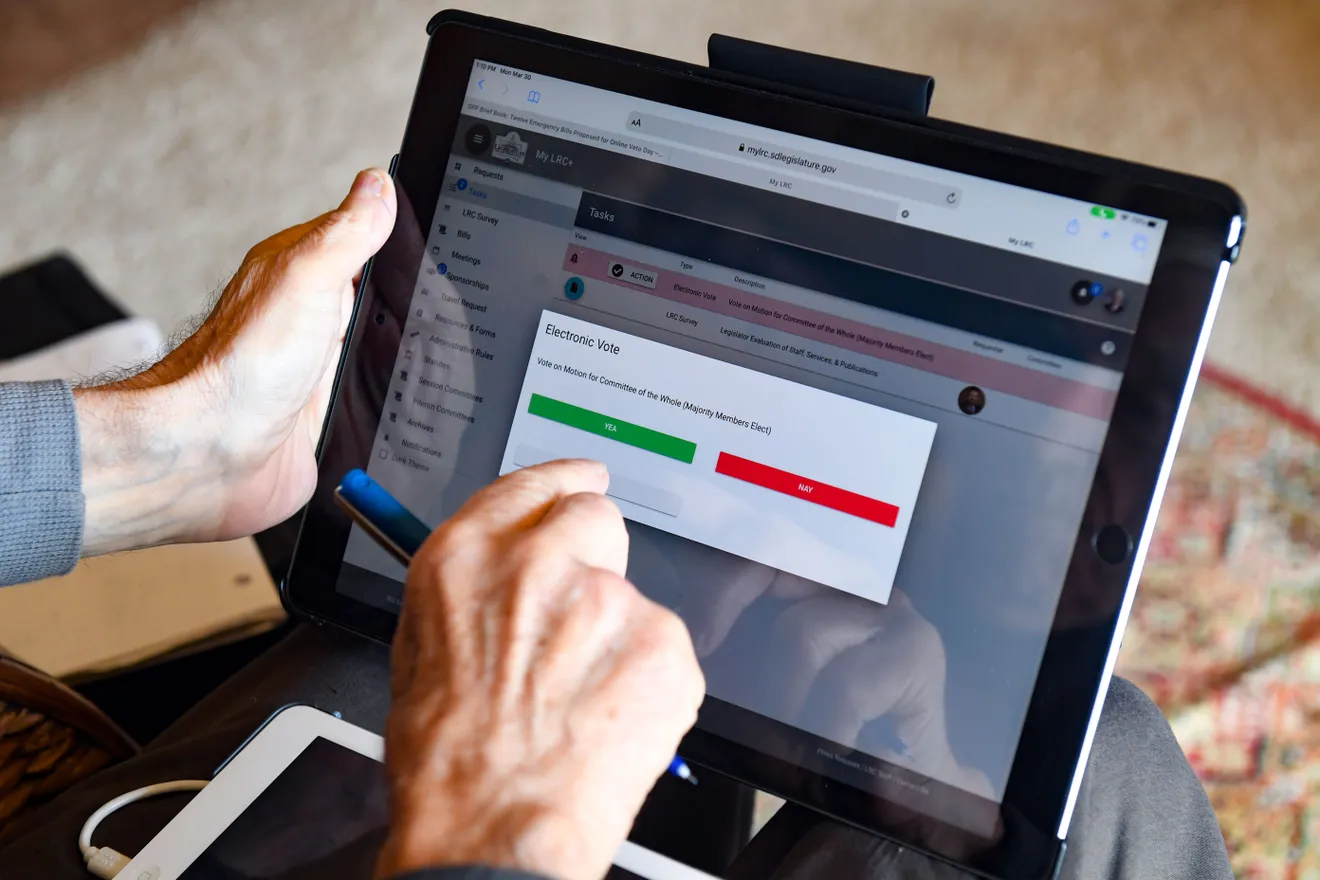
When a commercial alternative was later offered, LRC chose to keep our system. We delivered when it mattered and built something worth keeping.
Engineering across the legislative process.
Tools for drafting legislation, financial analysis, and the information the public relies on.
- Drafting and document production
- Microsoft Word integrations, structured drafting and amendments, review routing, document versions, and OpenXML and PDF processing.
From a Word draft to a legislative document
- Draft in Word. Custom ribbon tools handle legislative styles, sections, amendment instructions, and document information.
- Review and revise. Route work to reviewers, use comments and tracked changes, and save document versions.
- Produce the record. Structured document processing supports amendments, engrossing, and PDF output.
The drafting tools stay connected to legislative information while staff work in the editor they already know.
- Budget and fiscal analysis
- Funding and vendor analysis, fiscal scenarios, motion sheets, supplemental plans, budget briefs, and Excel reporting.
From agency information to a funding decision
- Examine the history. Review agency funding, revenue, expenditure, and vendor information.
- Develop a scenario. Work with fiscal scenarios, supplemental plans, and motion sheets for review and approval.
- Prepare the output. Bring the work into budget briefs, printable documents, and Excel reports.
Analysis and the documents used in decisions are part of the same working environment.
- Legislative and public workflows
- Committee operations, approvals, legislative records, and document publication, with ongoing development and maintenance.
Connect staff work with public information
Committee agendas, minutes, testimony submissions, guest registers, and hearing recordings connect operational work with the public record. Legislator self-service and staff approval workflows support the people doing that work.
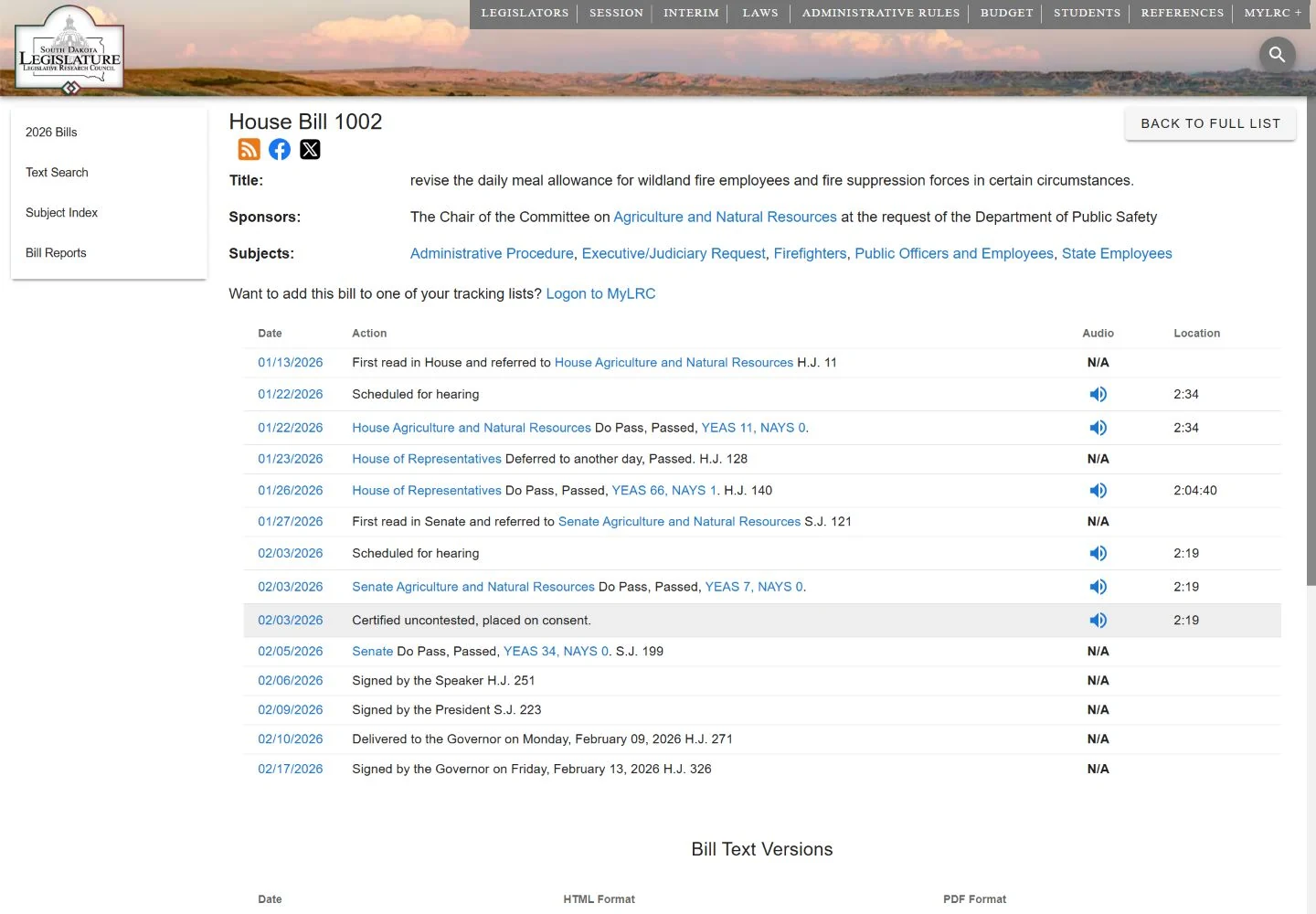
Follow a bill through the public record.
Open a real bill to inspect its action history, committee and floor votes, hearing audio, and published versions. This is the public side of a system built around the work of a legislature.
Preserve the history.
Expand what people can access.
We brought in South Dakota LRC records dating to Dakota Territory that were missing from the system we replaced.
Data conversion is included in our work, without an extra charge for older records or the number of years preserved. Your data should become more useful when you replace a system. Keeping its history is part of that work.
Reliability that continues after delivery.
100% monitored availability for SDLegislature.gov from April 22, 2022 through September 28, 2026. Better Stack recorded zero downtime and zero incidents during that period.
The public portal is client-hosted following our engineering recommendations. Current monitoring checks run every ten minutes.
View service statusThey chose us again.
We started working with South Dakota LRC in 2018. In 2023, they chose us again to continue developing their software. We still work with their team as the Legislature's needs evolve.
2023 selection: Executive Board minutes, page 2 (PDF)Project records and delivery history
Our work began on December 10, 2018, with an agreement to develop LawMaker, bill drafting, and legislative workflows. LRC later revised the contract and republished the RFP for the same project, allowing two years for the work.
The agreement gave LRC ownership of the software and documentation and required us to keep the source code in their repository. Client ownership is still how we work today.
The March 30, 2020 House journal describes the remote session and electronic voting. In it, the Speaker thanked the LRC IT team for making the session possible on short notice.